
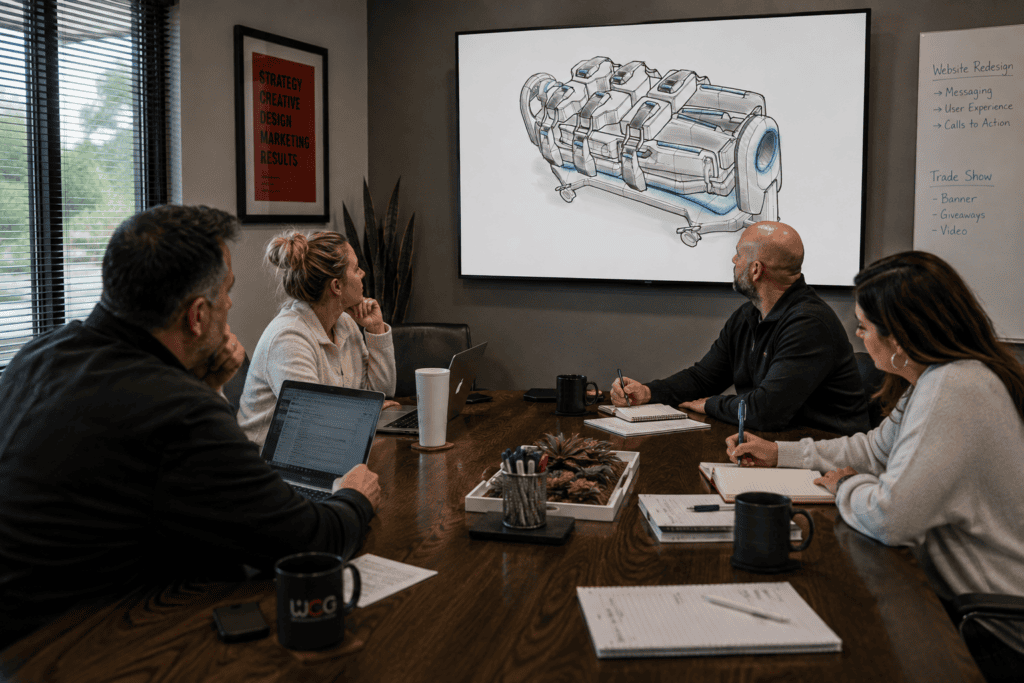
The difference between a logo and a brand goes much deeper than visual design. A logo identifies a business, while a brand is built from strategy, positioning, messaging, audience, experience and the perceptions people develop over time.
A startup medical equipment company was preparing to launch its first product. The founders were seasoned professionals. They knew their industry, understood the need they were addressing, and had developed an innovative solution they believed could make a meaningful impact.
They came to Woodward Creative Group because they needed a logo — at least that’s what they thought they needed.
As we began talking about the company, the product, their customers, and where they wanted the business to go, it became clear that jumping directly into logo design would have been premature.
There were bigger questions that needed answers first.
Who was this company?
What did it stand for?
Who exactly were they trying to reach?
What made their solution different?
How should they talk about themselves?
What should customers think and feel when they encountered the company for the first time?
What they thought they needed was a better logo. What they actually needed was a brand. That distinction changed everything.
This wasn’t unusual.
Companies often come to us asking for something tangible. A logo. A website. A brochure. An advertising campaign.
Those are things you can see, so naturally they become the focus.
But good creative work needs something underneath it.
In this case, we could have designed an attractive logo, presented several concepts, refined the selected direction, created the files, and completed exactly what the client initially asked us to do.
The problem was that we would have been designing without a foundation.
A logo can identify a company, but by itself it can’t define one.
Before we could determine what this new company should look like, we needed to understand what it should mean.
And because this was a startup, we had an unusual opportunity.
We weren’t trying to repair years of inconsistent messaging or undo an established perception. We had the chance to help define the company correctly from the beginning.
So the project changed.
Instead of starting with logo concepts, we started with questions.
Over the next three months, we worked closely with the leadership team to build the strategic foundation for the brand.
We explored the company from several perspectives, including the marketplace, the customer, the product, the competition, and the long-term vision of the founders.
Together, we began defining the elements that would eventually guide everything the company communicated.
Brand Position
Over the next three months, we worked closely with the leadership team to build the strategic foundation for the brand.
We explored the company from several perspectives, including the marketplace, the customer, the product, the competition, and the long-term vision of the founders.
Together, we began defining the elements that would eventually guide everything the company communicated.
Brand Pillars
What core ideas should consistently support the brand?
These became the principles that would help guide messaging, marketing, sales, and future creative decisions.
Mission & Voice
Why does the company exist beyond simply selling a product?
And when the company communicates, what should it sound like?
Professional? Innovative? Approachable? Authoritative? Reassuring?
The answers helped establish a voice that could remain consistent regardless of whether we were writing website copy, developing a video, preparing a trade show display, or creating a social media post.
Target Audience
Who were we really talking to?
In the medical industry, that question can become complicated very quickly. The person using a product may not be the person recommending it. The person recommending it may not be the person approving the purchase.
Understanding those audiences helped us determine what mattered to each of them and how the brand should communicate its value.
Positioning Statement
We developed a clear statement defining who the company served, what it provided, and why it was different.
That statement wasn’t necessarily something customers would ever see.
But we would.
And it became a filter for the creative decisions that followed.
Brand Tagline
Finally, we worked to distill the larger brand idea into language that was concise, memorable, and meaningful.
Only after those pieces began coming together did we turn our attention back to the original request.
The logo.
But now we weren’t simply trying to create something that looked professional.
We knew what the logo needed to represent.
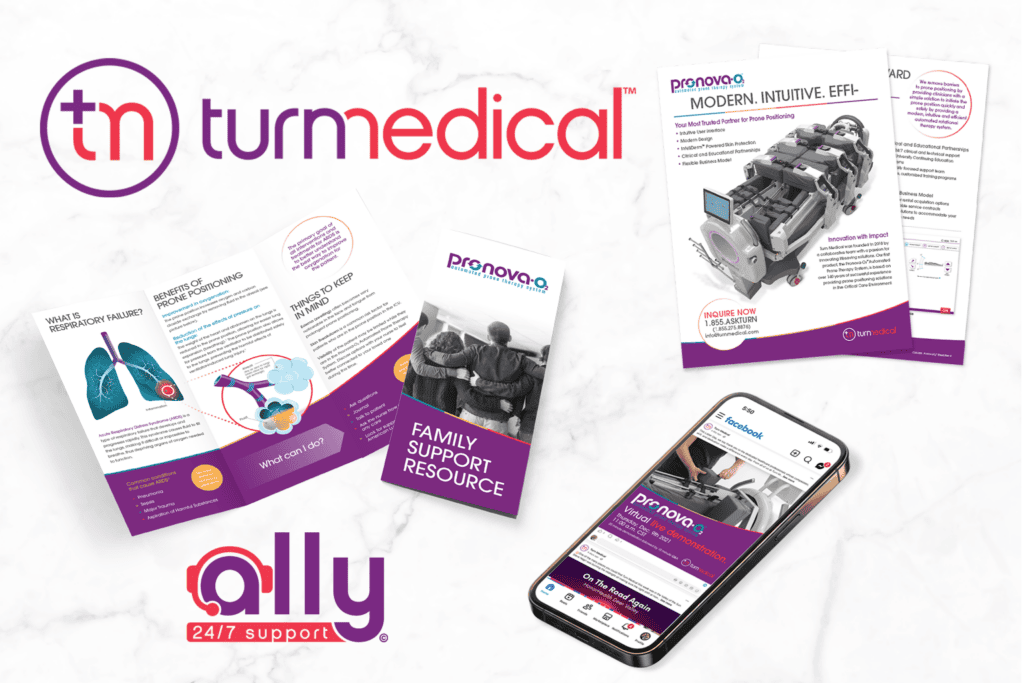
That distinction made the creative process entirely different.
The visual identity now had a reason for looking the way it did.
Typography could reflect the personality of the company.
Color could reinforce the appropriate emotional characteristics of the brand.
Imagery could speak specifically to the audiences we had identified.
Messaging could consistently reinforce the company’s position.
And the logo became part of a much larger system instead of an isolated piece of artwork.
From there, the brand began moving into the marketplace.
The website.
Social media.
Videos.
Trade show materials.
Sales and marketing communications.
Each application looked different because it served a different purpose, but they all felt like they came from the same company.
They worked seamlessly together.
That consistency created a recognizable brand experience from the very beginning.
And it all traced back to a client who originally walked through the door asking us for a logo.
There’s an important lesson in that experience, whether you’re launching a startup or leading an organization that’s been around for decades.
Before asking what your brand should look like, spend some time defining what your brand should mean.
A beautiful logo can’t compensate for unclear positioning.
A great website can’t fix a company that doesn’t understand its audience.
An advertising campaign can’t communicate a compelling difference if the organization hasn’t defined one.
And consistency is difficult when everyone inside the company has a different understanding of what the brand represents.
Brand development creates the foundation.
Design gives that foundation a visual expression.
That’s why I believe some of the most important work we do happens before anyone on our team begins designing.
We ask questions.
We listen.
We challenge assumptions.
We look at the company through the eyes of its customers.
We determine what makes it relevant and different.
Then we translate those ideas into something people can see, hear, experience, and ultimately remember.
Design gives people something to see. Branding gives them something to believe.
Before our team ever opens Illustrator, Photoshop, or InDesign, I want us to understand what we’re trying to accomplish.
Who are we talking to?
What do we want them to understand?
What makes this company different?
What should they remember?
And ultimately, why should they care?
I’ve always believed that design should solve a problem.
That doesn’t mean aesthetics aren’t important. They absolutely are. Great design attracts attention, creates emotion, establishes credibility, and can dramatically influence how people perceive a company.
But design becomes much more powerful when it’s built on strategy.
The medical equipment company came to us looking for a logo.
What we ultimately helped them create was an identity.
There’s a big difference.
A logo identifies your business. A brand gives people a reason to choose it.